

10 Practical SEO Strategies to Improve Your Website's Visibility
Introduction
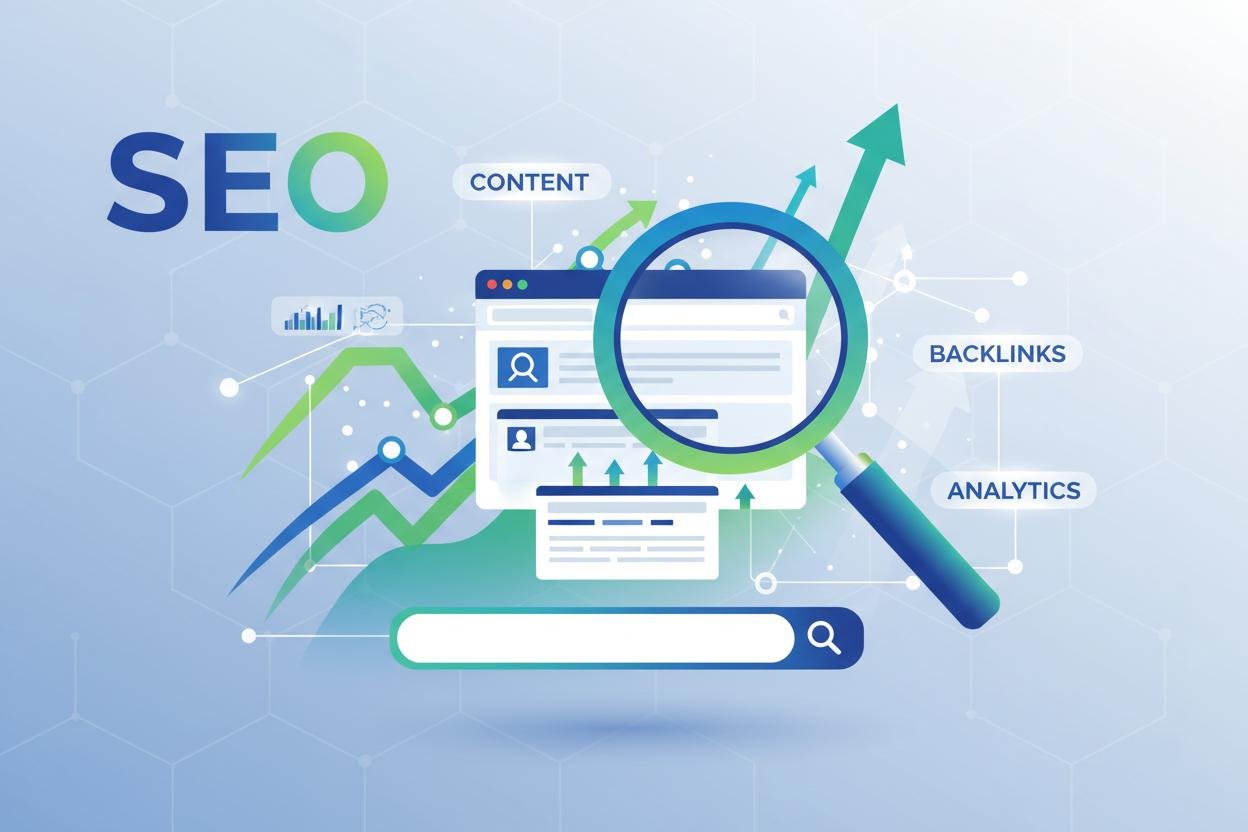
Search engine optimisation helps businesses make their websites easier for search engines and people to understand. Strong SEO involves more than adding keywords: it requires useful content, a technically sound website and a good user experience.
Here are 10 practical strategies to get started.
1. Research relevant keywords
Identify the terms your potential customers use when searching for your services. Focus on relevant search intent rather than choosing keywords solely because they have high search volume.
2. Optimise page titles and meta descriptions
Write a unique, descriptive SEO title and meta description for each important page. Explain what visitors will find and make the wording relevant to the page.
3. Use a clear heading structure
Organise content with a descriptive H1 and meaningful H2 and H3 headings. This improves readability and helps establish the page’s topic.
4. Publish useful, original content
Create service pages, guides, FAQs and blog articles that answer real customer questions. Avoid publishing repetitive pages that offer little additional value.
5. Improve website speed and mobile usability
Check Core Web Vitals, image sizes, layout stability and mobile navigation. A website should load efficiently and remain easy to use across screen sizes.
6. Strengthen internal linking
Link related blog articles to your service pages and connect relevant pages with descriptive anchor text. This helps visitors discover more information and supports search engine crawling.
7. Optimise images
Compress images, use descriptive file names and provide useful alternative text where appropriate. Avoid oversized images that slow down the page.
8. Improve local SEO
For businesses serving specific locations, maintain accurate Google Business Profile information, select appropriate categories and encourage genuine customer reviews. Create useful location-specific content where it reflects real services.
9. Earn relevant backlinks
Build relationships, publish valuable resources and seek legitimate industry mentions. Avoid buying manipulative links or participating in link schemes.
10. Monitor performance
Use Google Search Console and analytics tools to monitor impressions, clicks, landing pages and enquiries. Review performance regularly and improve pages based on the evidence.
Conclusion
SEO is an ongoing process, not a one-time task. Consistent improvements to content, technical performance and relevance can strengthen your website’s visibility over time, although rankings and results cannot be guaranteed.